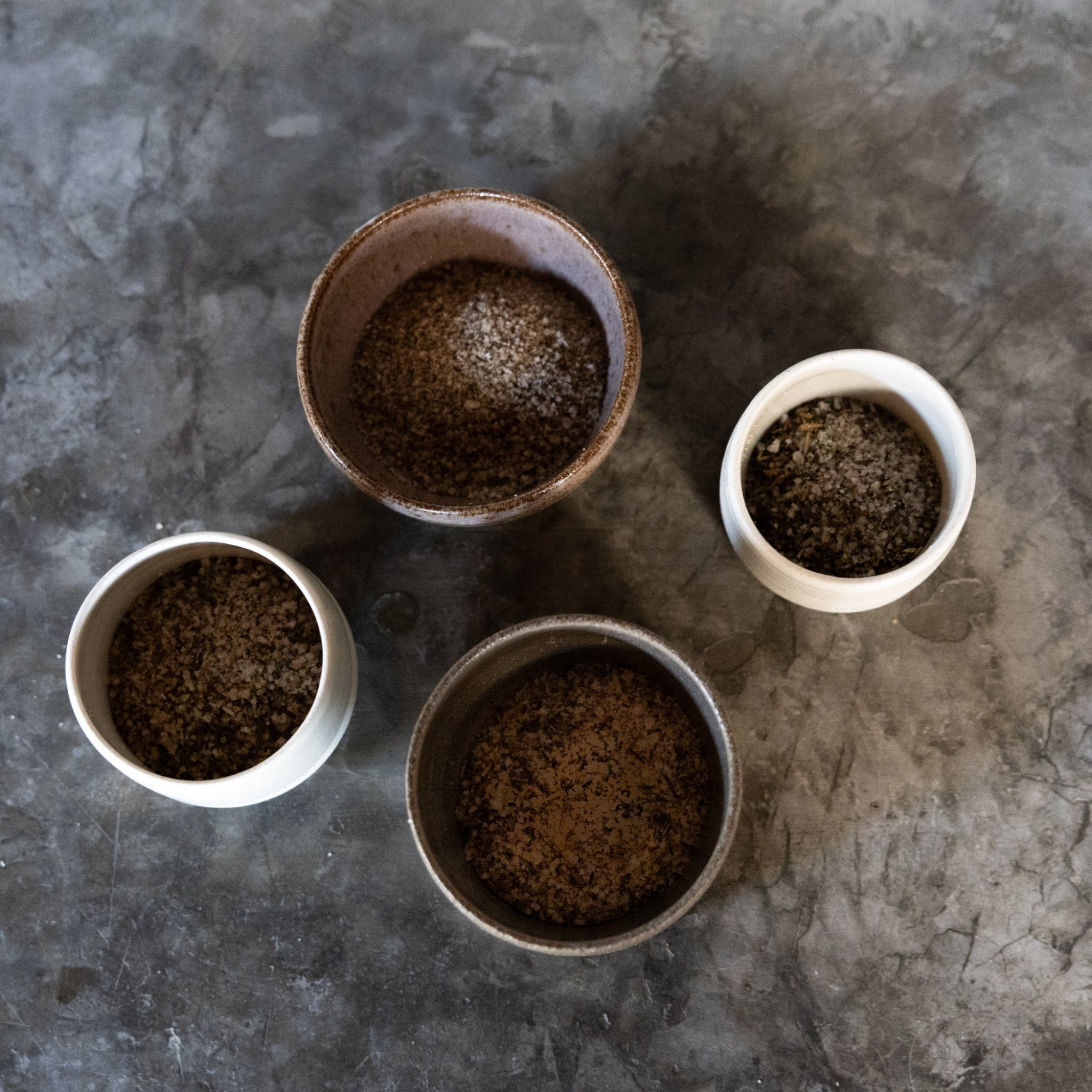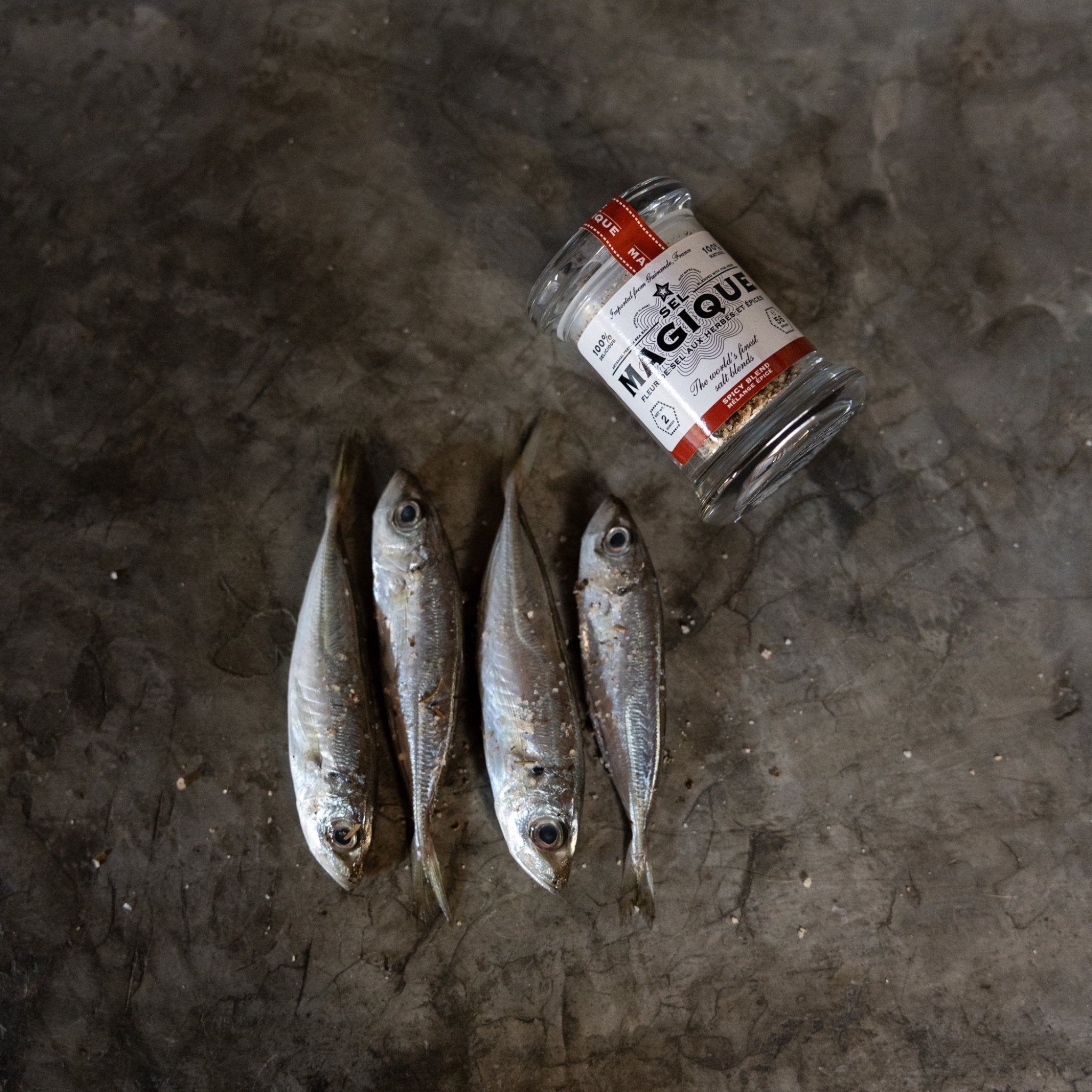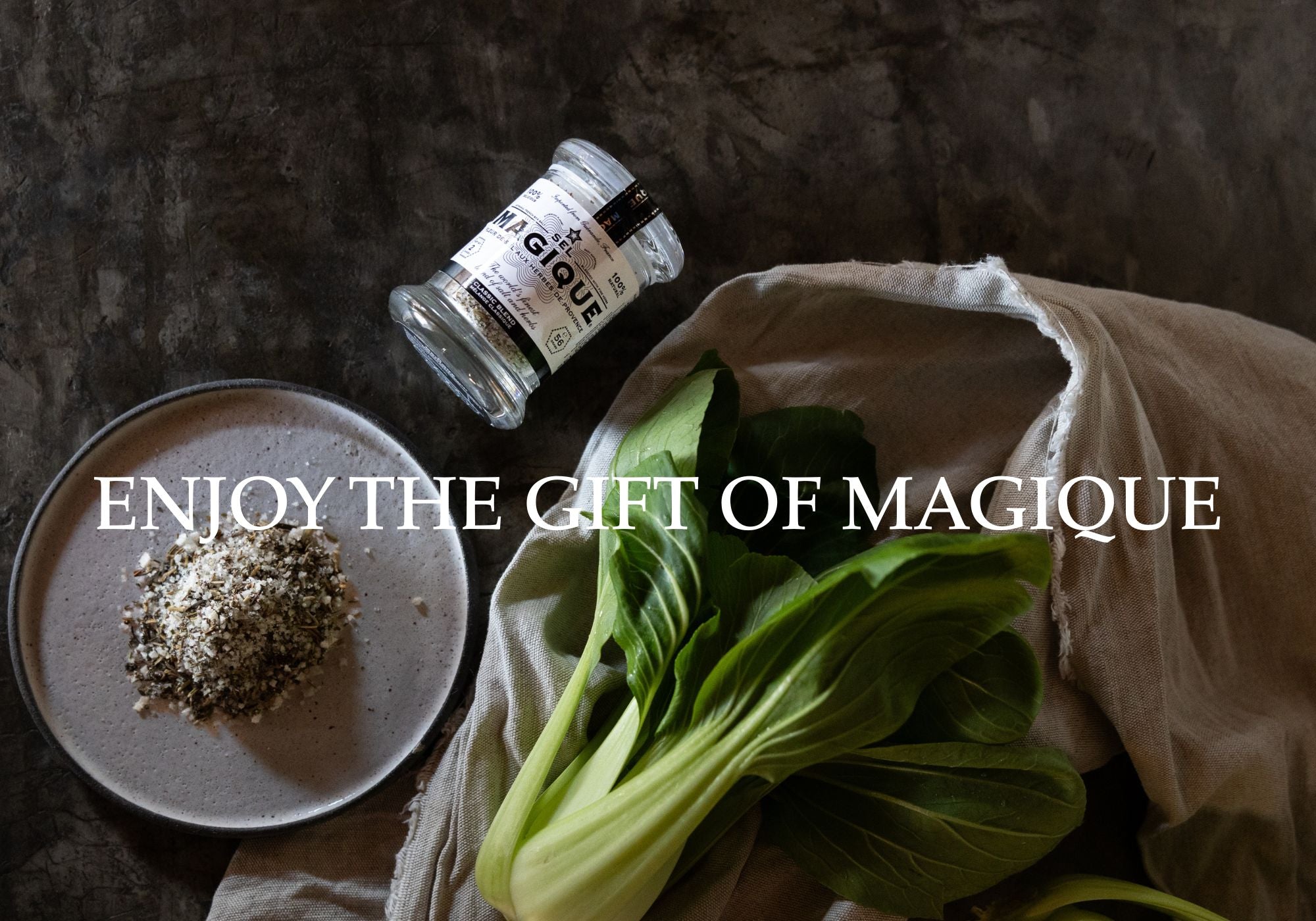


Most people have used salt every day of their lives. Few have stopped to ask what it actually is, where it comes from, or whether the salt they are reaching for is the right one for the moment. Fleur de sel answers all three questions at once — and the answer changes the way you cook.
What Fleur de Sel Is
Fleur de sel, literally the flower of salt in French, is formed when thin crystals develop on the surface of shallow, sun-warmed salt pans. Unlike table salt — which is mined, processed, and stripped of minerals — or sea salt, which is raked from the bottom of the pan, fleur de sel is skimmed gently from the very surface of the water before it sinks.
It forms only under specific conditions. The sun must be strong. The wind must be light and steady. The humidity must be low. On most days, conditions are wrong. On the right days, a thin crust of fragile, snowflake-like crystals forms — and the paludiers, the salt farmers of Brittany, skim them by hand with a wooden rake called a lousse.
This is why fleur de sel costs what it costs. It is not a marketing premium. It is a genuine scarcity, born of weather and skill and patience.
Why It Tastes Different
The difference between fleur de sel and table salt is not simply intensity. It is complexity.
Because fleur de sel is unprocessed, it retains the trace minerals of the seawater it formed from — magnesium, calcium, potassium — which give it a mineral quality that table salt lacks entirely. Where table salt is sharp and one-dimensional, fleur de sel is rounded, slightly sweet at first, with a lingering mineral depth that unfolds slowly.
The texture plays a role too. The irregular crystals dissolve unevenly on the tongue — some quickly, releasing an immediate hit of salinity; some slowly, extending the experience. This is why a pinch of fleur de sel on a piece of food feels different from the same weight of table salt. It is not more salty. It is more interesting.
Why It Is Always Added Last
Fleur de sel is a finishing salt. This is not a preference — it is a structural necessity.
The delicate crystal structure that makes fleur de sel taste the way it does cannot survive heat. Cooking with it would collapse the crystals, destroy the texture, and waste the mineral complexity you are paying for. Used as a finishing salt — added at the table, or in the final seconds before a dish is served — fleur de sel does something no amount of cooking salt can replicate. It sits on the surface of the food, melts at the edges while retaining some crunch at the centre, and delivers flavour in a way that is tasted and felt simultaneously.
The French have known this for centuries. The rest of the world is catching up.
What to Finish with Fleur de Sel
The short answer is: almost everything. The more useful answer is: anything where the final moment of the dish matters.
A piece of seared beef, rested and sliced, with a generous pinch of fleur de sel just before it reaches the table. A ripe tomato, halved, with olive oil and a scattering of crystals. Scrambled eggs, taken from the heat at the right moment, finished on the plate. Dark chocolate, a square broken and sprinkled before serving. Salted butter, made at home by folding fleur de sel into good cream butter until it is unevenly distributed — so some bites are saltier than others, which is the whole point.
The Sel Magique blends take this further — combining the mineral depth of Guérande fleur de sel with Provençal herbs, building flavour profiles designed for specific uses. But the principle remains the same. Add it last. Add it deliberately. Let the crystals do the work.
That is what fleur de sel is for.